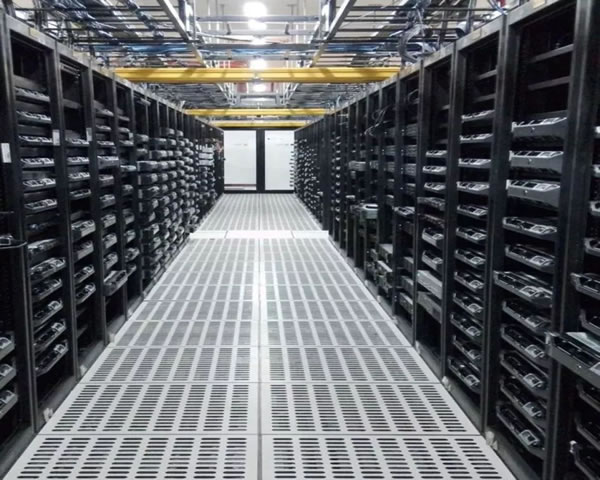
When deploying or migrating cloud services in Taiwan, a clear procurement list and appropriate hardware specifications can significantly impact performance, cost, and compliance. This article focuses on the topic of “Purchase Lists: Where to Buy Cloud Servers in Taiwan and How to Choose Hardware Specifications Based on Business Type.” It explains in detail the purchasing channels, the logic for selecting CPU/memory/storage/network specifications according to business type, as well as SLA and compliance considerations, to help decision-makers make systematic selections and purchases.
Overview of Purchase Channels — Where to Buy Cloud Servers in Taiwan
Taiwan cloud servers can be purchased through local cloud service providers, international cloud suppliers offering regional services in Taiwan data centers, distributors/channel partners, and cloud marketplaces. When making a purchase, prioritize evaluating the location of the data center (such as coverage in north, south, and central areas), after-sales support, compliance certifications, and local network connectivity. Consider the company’s requirements regarding latency and data sovereignty to determine the appropriate purchasing channel and contract type.
Select CPU and memory based on business type
Different businesses have vastly different requirements for computing resources: Lightweight websites and static services can use low-frequency CPUs and moderate amounts of memory ; High-concurrency applications, API gateways, and microservices require high-frequency multi-core processors and more memory ; For data analysis and batch processing, multi-core processors and fast memory are preferred. After evaluating peak traffic and average load, consider the flexible configuration of vertical scaling and horizontal scaling.
Storage type and IOPS requirements
Storage options include local SSDs, NVMe, object storage, and block storage. Transactional databases prioritize NVMe/SSDs with high IOPS and low latency ; Large volumes of cold data can be stored using objects to reduce costs ; Systems that require backup should have strategies for regular snapshots and offsite backups, with clear RPO/RTO values to meet business continuity requirements.
Measuring the Internet, Bandwidth, and Latency
The network is a key indicator that affects the user experience. When evaluating bandwidth requirements, peak and sustained traffic, inbound and outbound fees, and cross-border traffic costs must be considered. If the service is aimed at local users in Taiwan, choosing a data center with good connectivity to the local backbone network and configuring a CDN can reduce latency ; For cross-border services, pay attention to export bandwidth limits and acceleration strategies.
Key Points on SLAs, Backups, and Security Compliance
When purchasing cloud services in Taiwan, it is necessary to verify the supplier’s SLAs (availability, recovery time), data backup mechanisms, and security certifications. It is also important to ensure that they meet the data sovereignty and privacy requirements set by industry standards or regulations. The contract should clearly define the division of responsibilities, the incident reporting process, and the compensation mechanisms to reduce operational risks.
Deployment, testing, and scaling strategies
It is recommended to conduct a small-scale PoC before purchasing to verify performance and network latency, and to confirm that automated deployment, monitoring, and alerting mechanisms are feasible. Set up elastic scaling strategies (auto-scaling, containerization, or distributed architecture), and reserve a testing period and room for resource adjustment in the procurement contract to enable rapid response to business growth or sudden traffic spikes.
Key Points of the Purchase List (Summary)
List when creating the purchase list: Business requirements (concurrency/peak), CPU/memory specifications, storage type and IOPS, bandwidth and latency standards, SLA terms, redundancy and backup strategies, security and compliance requirements, management and after-sales support, scaling mechanisms, and testing plans. This list can be used as a standardized form for comparing prices and evaluating suppliers.
Summary and Recommendations
In summary, “purchase list” Taiwan CVM The core principle of “choosing hardware specifications based on the business type and where to purchase” is to start with business requirements. By taking into account the local data center network, SLAs, and compliance requirements, the appropriate channels can be selected. This approach helps reduce decision-making risks through PoCs and clear procurement lists. It is recommended to first quantify the requirements, then compare the suppliers’ technical capabilities with the contract details, and finally leave room for testing and flexible adjustments to ensure stable operation and cost-effectiveness.
- Latest articles
- Sharing of experience in service-oriented operation and maintenance at the Hong Kong CN2 Sha Tin BGP data center
- Analysis of the ranking of protection capabilities of recommended brands of high-security servers in the United States from a technical indicators perspective
- Step-by-step tutorial for creating a highly engaged Discord Vietnamese server community from scratch
- Step-by-Step Guide to Setting Up Cloud Servers in Malaysia: From Environment Preparation to Practical Deployment
- An Analysis of Strategies for Choosing Japanese Cloud Server Accelerators from the Perspectives of Cost and Performance
- Bandwidth Management: Techniques for Ensuring Server Stability and Controlling Network Peaks at Hong Kong Server Farms
- How does Hong Kong’s advanced computer room management system ensure isolation in multi-tenant environments?
- Configuration considerations and security risk warnings for free Hong Kong cloud server trial software
- Reliability Assessment Report of Hong Kong’s Native IP Airports in Cross-Border Logistics Scenarios
- Monitoring Practices: Online Monitoring and Alert Settings for the Stability of Server Clusters in Hong Kong
- Popular tags
-
The current market situation and future of Taiwan server brand cloud hosting
This article discusses the current market status and future development trends of Taiwan server brand cloud hosting, and provides you with professional insights. -

are there any cloud server providers in taiwan: market research and analysis
this article conducts market research and analysis on cloud server providers in taiwan, and explores their market status and development trends. -

Understand the security and performance evaluation of Taiwan's cloud servers
This article discusses the security and performance evaluation of Taiwan's cloud servers, including detailed analysis of data protection, network security, response speed, etc.